
Introduction
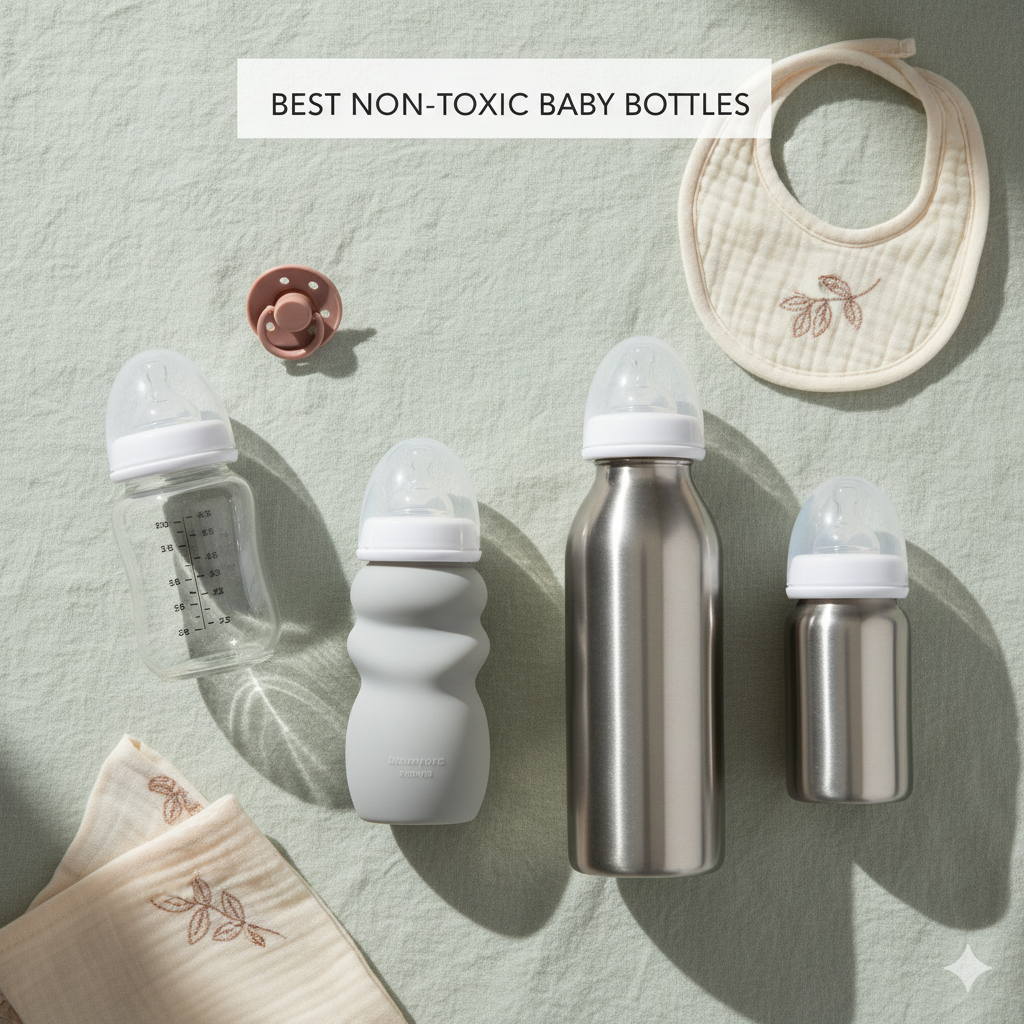
Feeding your baby safely starts with choosing the right bottle. Many traditional baby bottles contain plastics that may leach harmful chemicals like BPA, BPS, or phthalates — especially when heated.
In this guide, we’ll help you find the best non-toxic baby bottles in 2025 that are safe, durable, and parent-approved. Whether you’re a new parent or upgrading from plastic, these bottles offer peace of mind during every feed.
Why Choose Non-Toxic Baby Bottles?
-
Chemical Safety: No BPA, BPS, or harmful plasticizers.
-
Better Durability: Glass and stainless steel bottles last longer.
-
Easier to Clean: Non-toxic bottles resist odor and staining.
-
Eco-Friendly: Reduce waste with sustainable materials.
🍼 Tip: Always look for bottles labeled BPA-free, phthalate-free, and tested for heat resistance.
Top 7 Non-Toxic Baby Bottles of 2025
Each pick below is parent-tested, baby-approved, and safe for everyday use.
1. Philips Avent Natural Glass Bottle
Material: Borosilicate Glass
Why Parents Love It: Heat-resistant, easy to sterilize, wide nipple mimics breastfeeding.
Pros: Leak-proof, long-lasting, fits most pumps.
Cons: Slightly heavy for travel.
2. Comotomo Silicone Baby Bottle
Material: 100% Medical-Grade Silicone
Why Parents Love It: Soft, squeezable, anti-colic design.
Pros: Easy to clean, baby-friendly feel.
Cons: Slightly slow flow for older babies.
3. Lifefactory Glass Bottle
Material: Glass with silicone sleeve
Why Parents Love It: Durable, protective sleeve, dishwasher-safe.
Pros: Eco-friendly, stylish design.
Cons: Pricier than plastic options.
4. Pura Kiki Stainless Steel Bottle
Material: Food-Grade Stainless Steel
Why Parents Love It: Fully plastic-free bottle that grows with baby (can convert to sippy cup).
Pros: Versatile, safe, toxin-free.
Cons: Not transparent — can’t see liquid level easily.
5. Evenflo Feeding Balance+ Bottle
Material: Polypropylene (BPA-free plastic)
Why Parents Love It: Affordable, easy to find, soft nipple for newborns.
Pros: Lightweight, leak-resistant.
Cons: Plastic — replace after 3–6 months.
6. NUK Simply Natural Glass Bottle
Material: Tempered Glass
Why Parents Love It: Multiple nipple holes for natural flow, easy cleaning.
Pros: Comfortable latch, modern design.
Cons: Can break if dropped.
7. Hevea Glass Baby Bottle
Material: Borosilicate Glass + Natural Rubber Nipple
Why Parents Love It: 100% natural materials, eco-friendly packaging.
Pros: Sustainable, chemical-free.
Cons: Limited availability.
How to Choose the Right Bottle for Your Baby
-Check the material (glass, stainless steel, or medical-grade silicone).
-Pick the right nipple flow for your baby’s age.
-Choose easy-to-clean designs with fewer parts.
-Make sure the bottle fits your breast pump if you use one.
Cleaning & Sterilizing Tips
-
Use boiling water or a steam sterilizer (avoid harsh detergents).
-
Always air dry bottles upside down.
-
Replace nipples every 2–3 months.
FAQ: Common Questions
Q: Are silicone baby bottles safe?
A: Yes, medical-grade silicone bottles are non-toxic and heat resistant.
Q: Which is better — glass or stainless steel?
A: Both are excellent non-toxic options. Glass is clear and classic; stainless steel is unbreakable and portable.
Conclusion
Choosing a non-toxic baby bottle means fewer worries about chemicals and a healthier start for your baby. Start with one or two bottles from this list and see which your little one prefers — every baby is different!
Parent Tip: Pair your bottles with a non-toxic bottle brush and drying rack for the perfect safe feeding setup.